
Remember, now, WE are the Temple (1 Corinthians 3:16) and the Torah is to be written on our hearts (Jeremiah 31:33) in order to fulfill our callings as priests and kings (Revelation 1:6). Let’s continue our study of the Priestly divisions to enhance our understanding of the tasks ahead, the numbers required to minister in all areas of service and the details of Torah to be imbedded in our minds and character in order for us to teach the “Clean and the Unclean” in all areas of living.
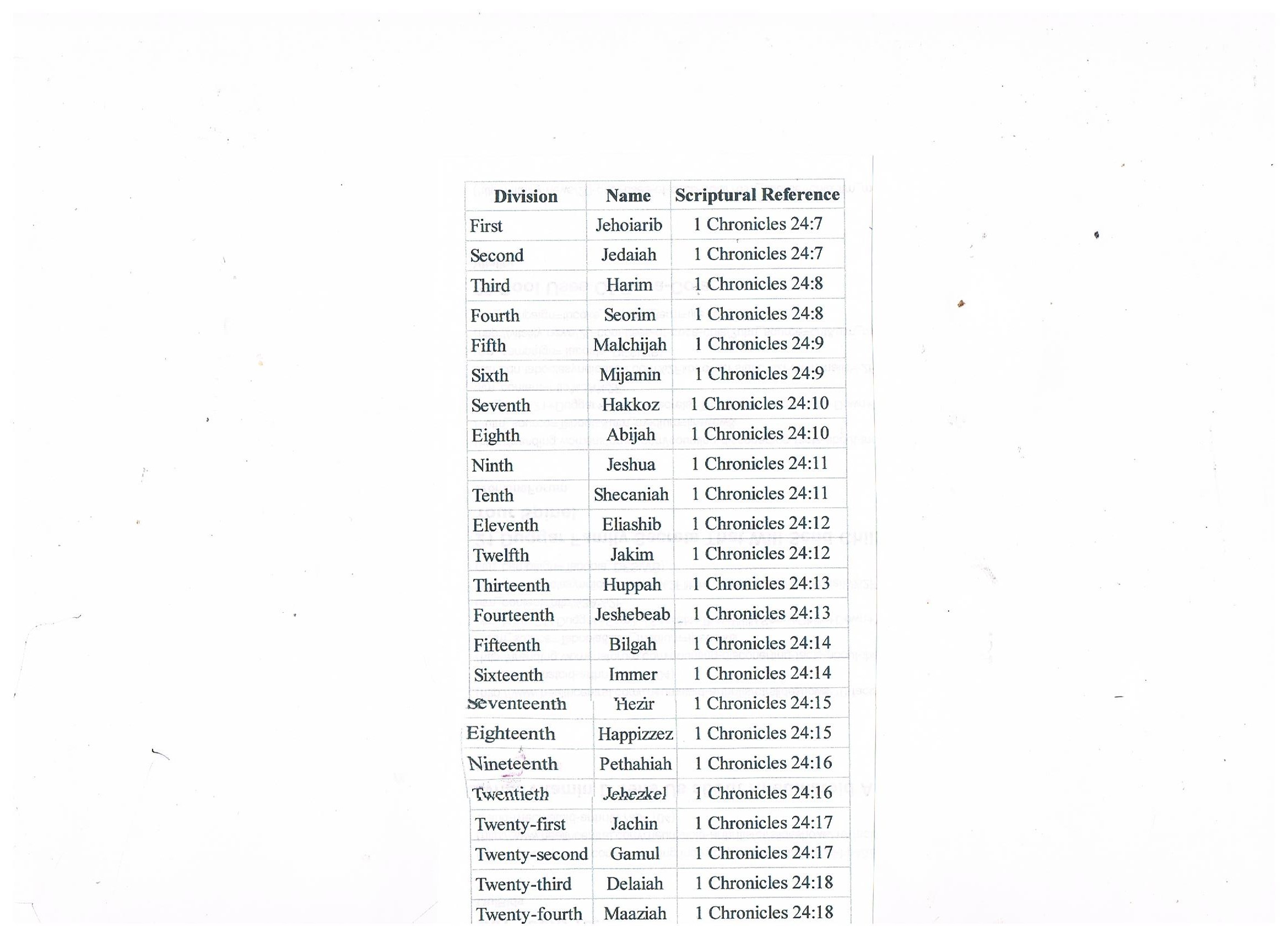
The priestly divisions (Hebrew “mishmar”) were work groups formed in the 10th century BC to enable better organization when Solomon’s temple for Yehovah was designed as a much enlarged permanent tabernacle for worship and teaching on the Sabbaths, New Moons and Annual High Sabbaths and feast days. These priests were all descendants of Aaron. Aaron’s sons that had sons were Eleazar and Ithamar. Zadok, from Eleazar’s descendants and Ahimelech, from Ithamar’s descendants were chosen by King David to create the priestly divisions. 16 groups from Eleazar and 8 from Ithamar were chosen due to sheer numbers of qualified leaders in each of the 2 lines.
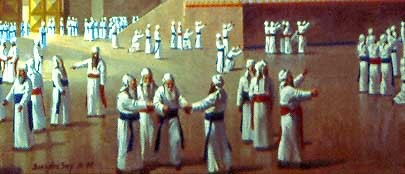
Lots were drawn to designate the order of ministering for the heads of the priestly orders when they entered the temple in Jerusalem. Their duties involved offering the daily and holy day sacrifices (korbanot in Hebrew), and blessing the worshippers in a ceremony known as “nesiat kapayim” (raising of the hands) otherwise known as the Priestly Blessing.
The number of Priests and Levites not from Aaron’s line , all at least 30 years old, were 38,000 men of which 24,000 were priests and priest’s assistants to oversee the labor of the temple, 6,000 were officers and judges, 4,000 were gatekeepers and 4,000 were musicians to play and sing with the instruments David made for giving praise to Yehovah. (1Chronicles 23:2-6)
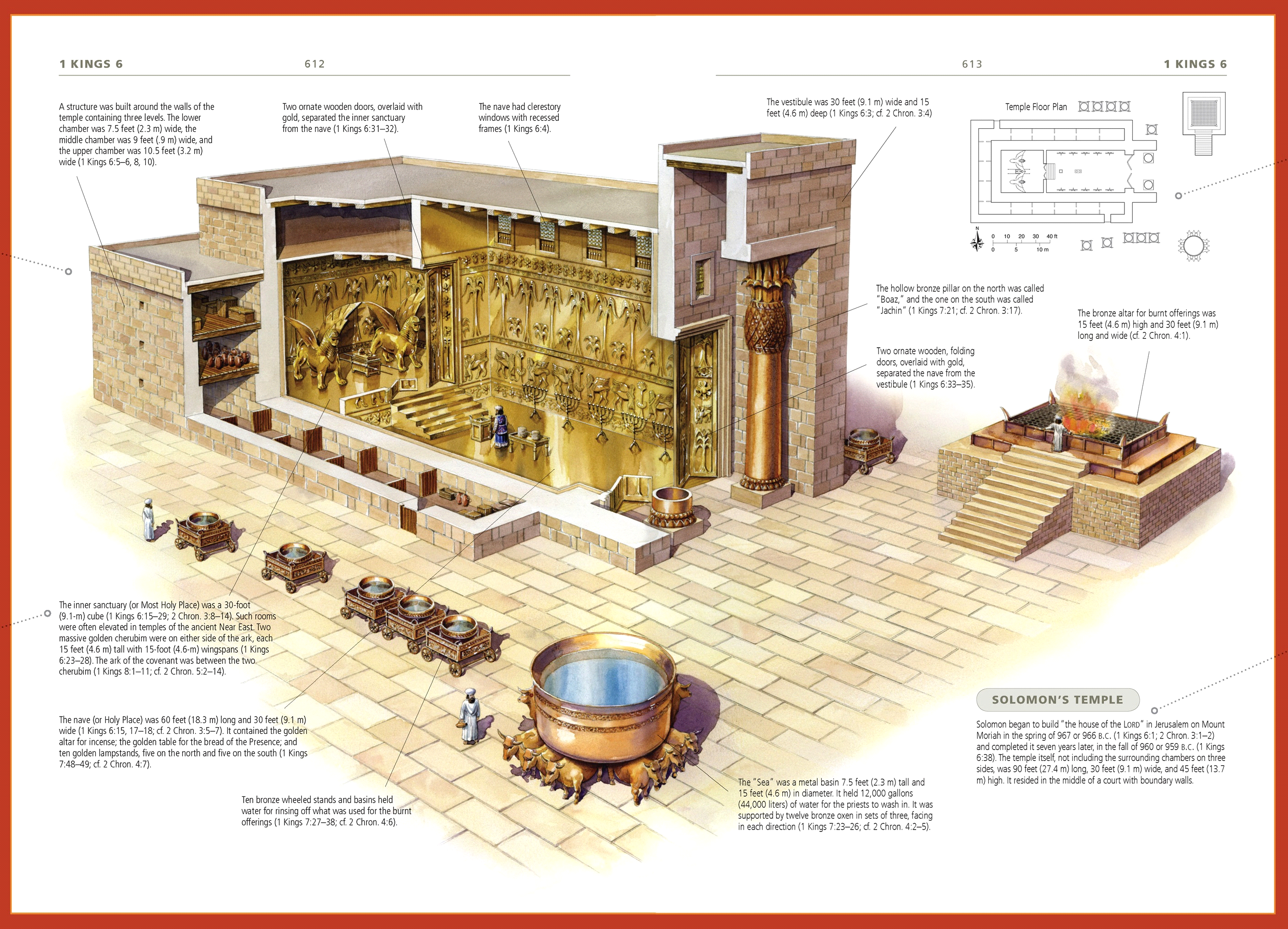
Altogether there was at least 1300 Levites in the Temple at any given time, although not all of them were serving on the same day. Based on this large service number, David raised the number of vessels and furniture in the Temple. Lampstands (Menorahs) from 1 to 10, Shewbread tables from 1 to 10, and lavers for washing and purification from 1 to 10. Also he made special carts to transport the lavers of water around the Temple.
 Tristate Messianic Fellowship