
- Prayer
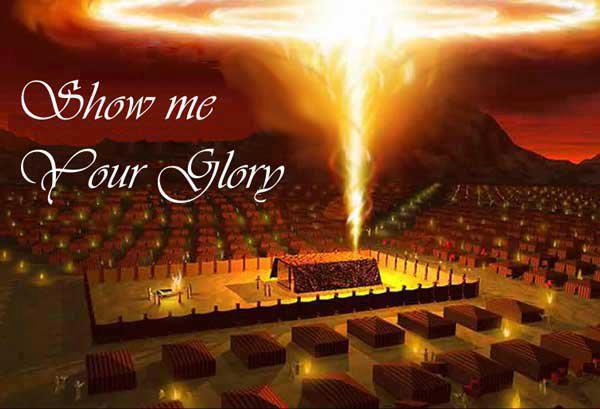
- Worship: “King of Glory” by CeCe Winans, “Praise You in this Storm” by Casting Crowns, “Don’t stop Praying” by Matthew West
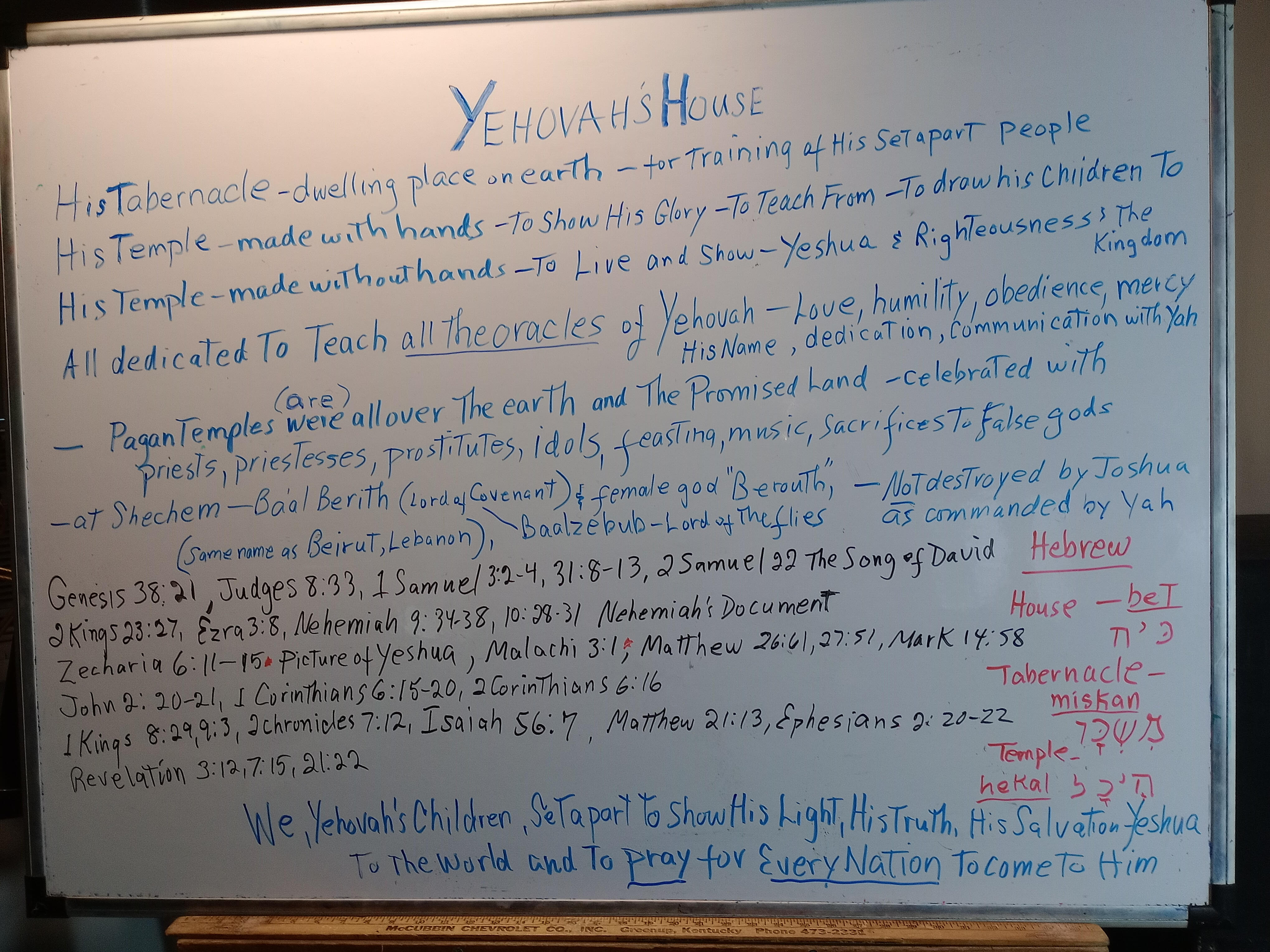
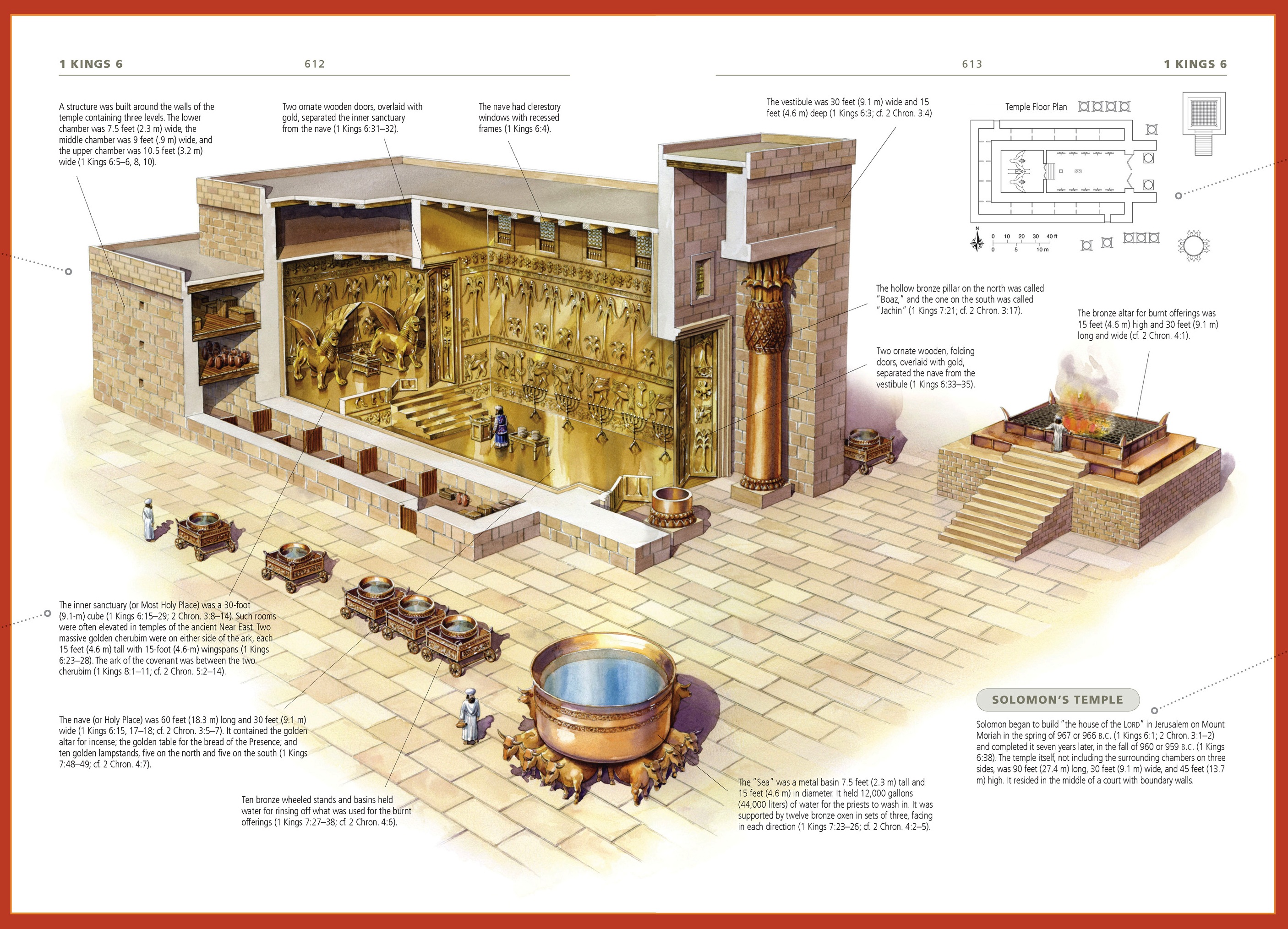
- Word study: Yehovah’s House
- Torah study: Numbers 18-19,
- Song: “Come, Jesus Come” by Stephan Mcwhirter





All These Things Added
by James Allen
Every phenomenon in social and national life (as in Nature) is an
effect, and all these effects are embodied by a cause which is not
remote and detached, but which is the immediate soul and life of the
effect itself. As the seed is contained in the flower, and the flower in
the seed, so the relation of cause and effect is intimate and
inseparable. An effect also is vivified and propagated, not by any life
inherent in itself, but by the life and impulse existing in the cause.
Looking out upon the world, we behold it as an arena of strife in which
individuals, communities, and nations are constantly engaged in
struggle, striving with each other for superiority, and for the largest
share of worldly possessions.
We see, also, that the weaker fall out defeated, and that the strong —
those who are equipped to pursue the combat with undiminished ardour —
obtain the victory, and enter into possession. And along with this
struggle we see the suffering which is inevitably connected with it —
men and women, broken down with the weight of their responsibilities,
failing in their efforts and losing all; families and communities broken
up, and nations subdued and subordinated.
We see seas of tears, telling of unspeakable anguish and grief; we see
painful partings and early and unnatural deaths; and we know that this
life of strife, when stripped of its surface appearances, is largely a
life of sorrow. Such, briefly sketched , are the phenomena connected
with that aspect of human life with which we are now dealing; such are
the effects as we see them; and they have one common cause which is
found in the human heart itself.
As all the multiform varieties of plant life have one common soil from
which to draw their sustenance, and by virtue of which they live and
thrive, so all the varied activities of human life are rooted in, and
draw their vitality from, one common source—/the human heart/. The cause
of all suffering and of all happiness resides, not in the outer
activities of human life, but in the inner activities of the heart and
mind; and every external agency is sustained by the life which it
derives from human conduct.
The organized life-principle in man carves for itself outward channels
along which it can pour its pent-up energies, makes for itself vehicles
through which it can manifest its potency and reap its experience, and,
as a result, we have our religious, social and political organizations.
All the visible manifestations of human life, then, are effects; and as
such, although they may possess a reflex action, they can never be
causes, but must remain forever what they are—/dead effects/, galvanized
into life by an enduring and profound cause.
It is the custom of men to wander about in this world of effects, and to
mistake its illusions for realities, eternally transposing and
readjusting these effects in order to arrive at a solution of human
problems, instead of reaching down to the underlying cause which is at
once the centre of unification and the basis upon which to build a
peace-giving solution of human life.
The strife of the world in all its forms, whether it be war, social or
political quarrelling, sectarian hatred, private disputes or commercial
competition, has its origin in one common cause, namely,/individual
selfishness/. And I employ this term selfishness in a far-reaching
sense; in it I include all forms of self-love and egotism— I mean by it
the desire to pander to, and preserve at all costs, the personality.
This element of selfishness is the life and soul of competition, and of
the competitive laws. Apart from it they have no existence. But in the
life of every individual in whose heart selfishness in any form is
harboured, these laws are brought into play, and the individual is
subject to them.
Innumerable economic systems have failed, and must fail, to exterminate
the strife of the world. They are the outcome of the delusion that
outward systems of government are the causes of that strife, whereas
they are but the visible and transient effect of the inward strife, the
channels through which it must necessarily manifest itself. To destroy
the channel is, and must ever be ineffectual, as the inward energy will
immediately make for itself another, and still another and another.
Strife cannot cease; and the competitive laws /must prevail so long as
selfishness is fostered in the heart/. All reforms fail where this
element is ignored or unaccounted for; all reforms will succeed where it
is recognized, and steps are taken for its removal.
Selfishness, then, is the root cause of competition, the foundation on
which all competitive systems rest, and the sustaining source of the
competitive laws. It will thus be seen that all competitive systems, all
the visible activities of the struggle of man with man, are as the
leaves and branches of a tree which overspreads the whole earth, the
root of that tree being individual selfishness, and the ripened fruits
of which are pain and sorrow.
This tree cannot be destroyed by merely lopping off its branches; to do
this effectively, /the root must be destroyed/. To introduce measures in
the form of changed external conditions is merely lopping off the
branches; and as the cutting away of certain branches of a tree gives
added vigour to those which remain, even so the very means which are
taken to curtail the competitive strife, when those means deal entirely
with its outward effects, will but add strength and vigour to the tree
whose roots are all the time being fostered and encouraged in the human
heart. The most that even legislation can do is to prune the branches,
and so prevent the tree from altogether running wild.
Great efforts are now being put forward to found a “Garden City,” which
shall be a veritable Eden planted in the midst of orchards, and whose
inhabitants shall live in comfort and comparative repose. And beautiful
and laudable are all such efforts when they are prompted by unselfish
love. But such a city cannot exist, or cannot long remain the Eden which
it aims to be in its outward form, unless the majority of its
inhabitants have subdued and conquered the inward selfishness.
Even one form of selfishness, namely, self-indulgence, if fostered by
its inhabitants, will completely undermine that city, levelling its
orchards to the ground, converting many of its beautiful dwellings into
competitive marts, and obnoxious centres for the personal gratification
of appetite, and some of its buildings into institutions for the
maintenance of order; and upon its public spaces will rise jails,
asylums, and orphanages, for where the spirit of self-indulgence is, the
means for its gratification will be immediately adopted, without
considering the good of others or of the community (for selfishness is
always blind), and the fruits of that gratification will be rapidly reaped.
The building of pleasant houses and the planting of beautiful gardens
can never, of itself, constitute a Garden City unless its inhabitants
have learned that self-sacrifice is better than self-protection, and
have first established in their own hearts the Garden City of unselfish
love. And when a sufficient number of men and women have done this, the
Garden City will appear, and it will flourish and prosper, and great
will be its peace, for “out of the heart are the issues of life.”
Having found that selfishness is the root cause of all competition and
strife, the question naturally arises as to how this cause shall be
dealt with, for it naturally follows that a cause being destroyed, all
its effects cease; a cause being propagated, all its effects, however
they may be modified from without, /must/ continue.
Every man who has thought at all deeply upon the problem of life, and
has brooded sympathetically upon the sufferings of mankind, has seen
that selfishness is at the root of all sorrow—in fact, this is one of
the truths that is first apprehended by the thoughtful mind. And along
with that perception there has been born within him a longing to
formulate some methods by which that selfishness might be overcome.
The first impulse of such a man is to endeavour to frame some outward
law, or introduce some new social arrangements or regulations, which
shall put a check on /the selfishness of others/.
The second tendency of his mind will be to feel his utter helplessness
before the great iron will of selfishness by which he is confronted.
Both these attitudes of mind are the result of an incomplete knowledge
of what constitutes selfishness. And this partial knowledge dominates
him because, although he has overcome the grosser forms of selfishness
in himself, and is so far noble, he is yet selfish in other and more
remote and subtle directions.
This feeling of “helplessness” is the prelude to one of two
conditions—the man will either give up in despair, and again sink
himself in the selfishness of the world, or he will search and meditate
until he finds another way out of the difficulty. And that way he will
find. Looking deeper and ever deeper into the things of life;
reflecting, brooding, examining, and analysing; grappling with every
difficulty and problem with intensity of thought, and developing day by
day a profounder love of Truth—by these means his heart will grow and
his comprehension expand, and at last he will realize that the way to
destroy selfishness is not to try to destroy /one form/ of it in other
people, but to destroy it utterly, root and branch, /in himself/.
The perception of this truth constitutes spiritual illumination, and
when once it is awakened in the mind, the “straight and narrow way” is
revealed, and the Gates of the Kingdom already loom in the distance.
Then does a man apply to himself (not to others) these words—/And why
beholdest thou the mote that is in thy brother’s eye, but considerest
not the beam that is in thy own eye? Or how wilt thou say to thy
brother, let me pull out the mote out of thine eye; and, behold, a beam
is in thine own eye? Thou hypocrite, first cast out the beam out of
thine own eye; and then shall thou see clearly to cast out the mote out
of thine brother’s eye./
When a man can apply these words to himself and act upon them, judging
himself mercilessly, but judging none other, then will he find his way
out of the hell of competitive strife, then will he rise above and
render of non-effect the laws of competition, and will find the higher
Law of Love, subjecting himself to which every evil thing will flee from
him, and the joys and blessings which the selfish vainly seek will
constantly wait upon him. And not only this, he will, having lifted
himself, lift the world. By his example many will see the Way, and will
walk it; and the powers of darkness will be weaker for having lived.
It will here be asked, “But will not man who has risen above his
selfishness, and therefore above the competitive strife, suffer through
the selfishness and competition of those around him? Will he not after
all the trouble he has taken to purify himself, suffer at the hands of
the impure?”
No, he will not. The equity of the Divine Order is perfect, and cannot
be subverted, so that it is impossible for one who has overcome
selfishness to be subject to those laws which are brought into operation
by the action of selfishness; in other words, each individual suffers by
virtue of his own selfishness.
It is true that the selfish all come under the operation of the
competitive laws, and suffer collectively, each acting, more or less, as
the instrument by which the suffering of others is brought about, which
makes it appear, on the surface, as though men suffered for the sins of
others rather than their own. But the truth is that in a universe the
very basis of which is harmony, and which can only be sustained by the
perfect adjustment of all its parts, each unit receives its /own/
measure of adjustment, and suffers by and of itself.
Each man comes under the laws of his own being, never under those of
another. True, he will suffer like another, and even through the
instrumentality of another, if he elects to live under the same
conditions as that other. But if he chooses to desert those conditions
and to live under another and higher set of conditions of which that
other is ignorant, he will cease to come under, or be affected by, the
lower laws.
Let us now go back to the symbol of the tree and carry the analogy a
little further. Just as the leaves and branches are sustained by the
roots, so the roots derive their nourishment from the soil, groping
blindly in the darkness for the sustenance which the tree demands. In
like manner, selfishness, the root of the tree of evil and of suffering,
derives its nourishment from the dark soil of /ignorance/. In this it
thrives; upon this it stands and flourishes. By ignorance I mean
something vastly different from lack of learning; and the sense in which
I use it will be made plain as I proceed.
Selfishness always gropes in the dark. It has no knowledge; by its very
nature it is cut off from the source of enlightenment; it is a blind
impulse, knowing nothing, obeying no law, for it knows none, and is
thereby forcibly bound to those competitive laws by virtue of which
suffering is inflicted in order that harmony may be maintained.
We live in a world, a universe, abounding with all good things. So great
is the abundance of spiritual, mental and material blessings that every
man and woman on this globe could not only be provided with every
necessary good, but could live in the midst of abounding plenty, and yet
have much to spare. Yet, in spite of this, what a spectacle of ignorance
do we behold!
We see on the one hand millions of men and women chained to a ceaseless
slavery, interminably toiling in order to obtain a poor and scanty meal
and a garment to cover their nakedness; and on the other hand we see
thousands, who already have more than they require and can well manage,
depriving themselves of all the blessings of a true life and of the vast
opportunities which their possessions place within their reach, in order
to accumulate more of those material things for which they have no
legitimate use. Surely men and women have no more wisdom than the beasts
which fight over the possession of that which is more than they can all
well dispose of, and which they could all enjoy in peace!
Such a condition of things can only occur in a state of ignorance deep
and dark; so dark and dense as to be utterly impenetrable save to the
unselfish eye of wisdom and truth. And in the midst of all this striving
after place and food and raiment, there works unseen, yet potent and
unerring, the Overruling Law of Justice, meting out to every individual
his own quota of merit and demerit. It is impartial; it bestows no
favours; it inflicts no unearned punishments:
It knows not wrath nor pardon; utter-true
It measures mete, its faultless balance weighs;
Times are as nought, tomorrow it will judge,
Or after many days.
The rich and the poor alike suffer for /their own selfishness/; and none
escapes. The rich have their particular sufferings as well as the poor.
Moreover, the rich are continually losing their riches; the poor are
continually acquiring them. The poor man of today is the rich man of
tomorrow, and vice versa.
There is no stability, no security in hell, and only brief and
occasional periods of respite from suffering in some form or other.
Fear, also, follows men like a great shadow, for the man who obtains and
holds by selfish force will always be haunted by a feeling of
insecurity, and will continually fear its loss; while the poor man, who
is selfishly seeking or coveting material riches, will be harassed by
the fear of destitution. And one and all who live in this underworld of
strife are overshadowed by one great fear—the fear of death.
Surrounded by the darkness of ignorance, and having no knowledge of
those eternal and life-sustaining Principles out of which all things
proceed, men labour under the delusion that the most important and
essential things in life are food and clothing, and that their first
duty is to strive to obtain these, believing that these outward things
are the source and cause of all comfort and happiness.
It is the blind animal instinct of self-preservation (the preservation
of the body and personality), by virtue of which each man opposes
himself to other men in order to “get a living” or “secure a
competency,” believing that if he does not keep an incessant watch on
other men, and constantly renew the struggle, they will ultimately “take
the bread out of his mouth.”
It is out of this initial delusion that comes all the train of
delusions, with their attendant sufferings. Food and clothing are not
the /essential/ things of life; not the causes of happiness. They are
non-essentials, effects, and, as such, proceed by a process of natural
law from the essentials, the underlying cause.
The essential things in life are the enduring elements in
character—integrity, faith, righteousness, self-sacrifice, compassion,
love; and out of these all good things proceed.
Food and clothing, and money are dead effects; there is in them no life,
no power except that which we invest with them. They are without vice
and virtue, and can neither bless nor harm. Even the body which men
believe to be themselves, to which they pander, and which they long to
keep, must very shortly be yielded up to the dust. But the higher
elements of character are life itself; and to practice these, to trust
them, and to live entirely in them, constitutes the Kingdom of Heaven.
The man who says, “I will first of all earn a competence and secure a
good position in life, and will then give my mind to those higher
things,” does not understand these higher things, does not believe them
to be higher, for if he did, it would not be possible for him to neglect
them. He believes the material outgrowths of life to be the higher, and
therefore he seeks them first. He believes money, clothing and position
to be of vast and essential importance, righteousness and truth to be at
best secondary; for a man always sacrifices that which he believes to be
lesser to that which he believes to be greater.
Immediately after a man realizes that righteousness is of more
importance than the getting of food and clothing, he ceases to strive
after the latter, and begins to live for the former. It is here where we
come to the dividing line between the two Kingdoms—Hell and Heaven.
Once a man perceives the beauty and enduring reality of righteousness,
his whole attitude of mind toward himself and others and the things
within and around him changes. The love of personal existence gradually
loses its hold on him; the instinct of self-preservation begins to die,
and the practice of self-renunciation takes its place. For the sacrifice
of others, or of the happiness of others, for his own good, he
substitutes the sacrifice of self and of his own happiness for the good
of others. And thus, rising above self, he rises above the competitive
strife which is the outcome of self, and above the competitive laws
which operate only in the region of self, and for the regulation of its
blind impulses.
He is like the man who has climbed a mountain, and thereby risen above
all the disturbing currents in the valleys below him. The clouds pour
down their rain, the thunders roll and the lightnings flash, the fogs
obscure, and the hurricanes uproot and destroy, but they cannot reach
him on the calm heights where he stands, and where he dwells in
continual sunshine and peace.
In the life of such a man the lower laws cease to operate, and he now
comes under the protection of a higher Law—namely, the Law of Love; and,
in accordance with his faithfulness and obedience to this Law, will all
that is necessary for his well-being come to him at the time when he
requires it.
The idea of gaining a position in the world cannot enter his mind, and
the external necessities of life, such as money, food and clothing, he
scarcely ever thinks about. But, subjecting himself for the good of
others, performing all his duties scrupulously and without thinking of
reward, and living day by day in the discipline of righteousness, all
other things follow at the right time and in the right order.
Just as suffering and strife inhere in, and spring from, their root
cause, selfishness, so blessedness and peace inhere in, and spring from,
their root-cause, righteousness. And it is a full and all-embracing
blessedness, complete and perfect in every department of life, for that
which is morally and spiritually right is physically and materially right.
Such a man is free, for he is freed from all anxiety, worry, fear,
despondency, all those mental disturbances which derive their vitality
from the elements of self, and he lives in constant joy and peace, and
this while living in the very midst of the competitive strife of the world.
Yet, though walking in the midst of Hell, its flames fall back before
and around him, so that not one hair of his head can be singed. Though
he walks in the midst of the lions of selfish force, for him their jaws
are closed and their ferocity is subdued. Though on every hand men are
falling around him in the fierce battle of life, he falls not, neither
is he dismayed, for no deadly bullet can reach him, no poisoned shaft
can pierce the impenetrable armour of his righteousness. Having lost the
little, personal, self-seeking life of suffering, anxiety, fear, and
want, he has found the illimitable, glorious, self-perfecting life of
joy and peace and plenty.
“Therefore take no thought, saying ’What shall we eat?’ or, ’What shall
we drink?’ or, ’Wherewithal shall we be clothed? . . .’ For your
heavenly Father knoweth ye have need of all these things. But seek ye
first the Kingdom of God, and His Righteousness, and all these things
shall be added unto you.”
 Tristate Messianic Fellowship